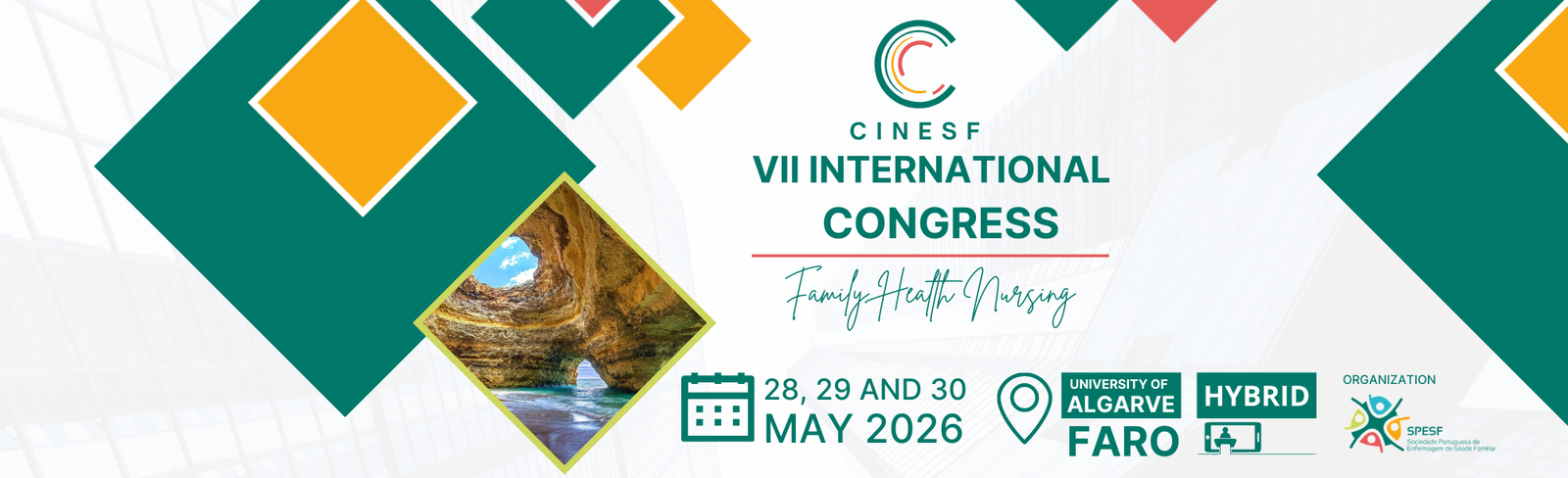
VII CINESF will take place at the University of Algarve Gambelas Campus, Faro, Portugal.
Faro, the capital of Portugal’s Algarve region, is a charming coastal city that offers a perfect blend of history, culture, and modern amenities. Is home to the country’s third-largest airport, making it a key gateway to the stunning beaches of southwestern Europe.
Faro’s history dates back to Phoenician times and includes periods under Roman, Visigoth, and Moorish rule. It became part of Portugal in 1249, and King Afonso III built protective walls around the city. By the 1400s, Faro was a major cultural center. After being plundered by the Earl of Essex in 1597, the city suffered further damage in the 1755 earthquake, although much of the Old Town was preserved. Faro became the capital of Algarve in 1834.
The city is a perfect blend of culture and beach, with many historical sights and monuments, making it ideal for those who want both relaxation and exploration. The best time to visit is between late June and early September, when the weather is warm and dry, although it’s a great destination year-round due to its mild Mediterranean climate.
Conference attendees will have the opportunity to explore the Faro city’s rich heritage, including its medieval old town and the picturesque Ria Formosa lagoon system. Faro’s Mediterranean climate, beautiful beaches, and excellent cuisine enhance its appeal as a conference destination. The charming walled town offers a mix of history and stunning beaches, including one on a desert island. Centrally located in the Algarve, Faro boasts great public transport and ferry access to the nearby Ria Formosa Natural Park, known for its lagoons and barrier islands.
The University of Algarve, founded in 1979, is a young and dynamic institution known for its commitment to research and innovation. Located in the heart of Faro, the university plays a vital role in the region’s academic and cultural life. With its modern facilities and strong emphasis on health sciences, the University of Algarve provides an ideal setting for a conference focused on medical education assessment.
More information about Faro can be found at www.faroportugaltourism.com
Faro has a central train station (Estação de Faro) with good connections to other cities in the Algarve and beyond.
Faro has a central bus station (Terminal Rodoviário de Faro), located near the train station.
Taxis are widely available in Faro, particularly at the airport, train station, and in the city center.
Renting a car in Faro is easy, with a wide range of rental agencies available at the airport or in the city center (e.g., Europcar, Sixt, Hertz, Avis).
For sightseeing tours you can contact us at bookings@businessbyskyros.com
Forum Algarve is the closest major shopping center to the University of the Algarve. It offers a wide variety of shops, including international brands, fashion, electronics, home goods, and a large supermarket. There are also cafes, restaurants, a cinema and ample parking, making it a convenient choice for shopping and leisure near the university.
Forum Algarve is located just about 2 km (around 10-15 minutes by car) from the University of the Algarve. It’s a short drive or a 25 minute walk from the main university campus and is open every day from 10h00 to 23h00.
The official language of the VII CINESF Meeting is English. No translation will be provided.
Entry formalities in Portugal vary according to the country of origin. European Union (EU) citizens and the European Economic Area (EEA) as well as third-country nationals holding a residence permit of a Schengen State, do not need a Visa to enter Portugal. All non-EU citizens are asked to contact their local embassies for any specific requirements. All foreign citizens entering Portugal must have either a valid passport or a national valid ID card.
A list of countries that require a visa to Portugal is given at https://vistos.mne.gov.pt/en/
The organizing committee cannot accept liability for personal accidents or loss of/or damage to private property of participants and accompanying persons. Participants are advised to acquire their own personal travel and health insurance for their trip.
In case of emergency, land line or mobile phones users should call 112, the European emergency number to be sent for the relevant department.
Currency in Portugal is the Euro (€). Most banks are open at 09:00 and close by 15:00hrs, Monday through Friday.
Post offices are open from 8:00 to 18:00 hrs. Both are generally open during lunch hour.
Portugal also has an extensive network of cash dispensers which operate 24 hours a day. ATMs are widely distributed throughout the Conference venue and trough out the city.
Most credit cards allow you to withdraw money from ATM’s. You can exchange money from at least seven exchange bureaus from Monday to Saturday.
In May, Portugal, including Faro and the rest of the country, follows the Western European Summer Time (WEST), which is UTC +1.
In late May the weather in Faro Algarve Portugal transitions into the warmer summer season with average temperatures during the day typically reaching around 23°C to 26°C (73°F to 79°F) while at night temperatures usually hover around 15°C to 17°C (59°F to 63°F) making the evenings much warmer and more pleasant than in April with plenty of sunshine and a very low probability of rain
For more information please visit www.ipma.pt.
Portugal uses a 220V system, sockets have the European standard and plugs are two-prong.
Don’t miss our updates! Subscribe today!
Obrigado pela sua inscrição nas Newsletter. Irá receber as atualizações no seu email.
Encontramo-nos no Porto.